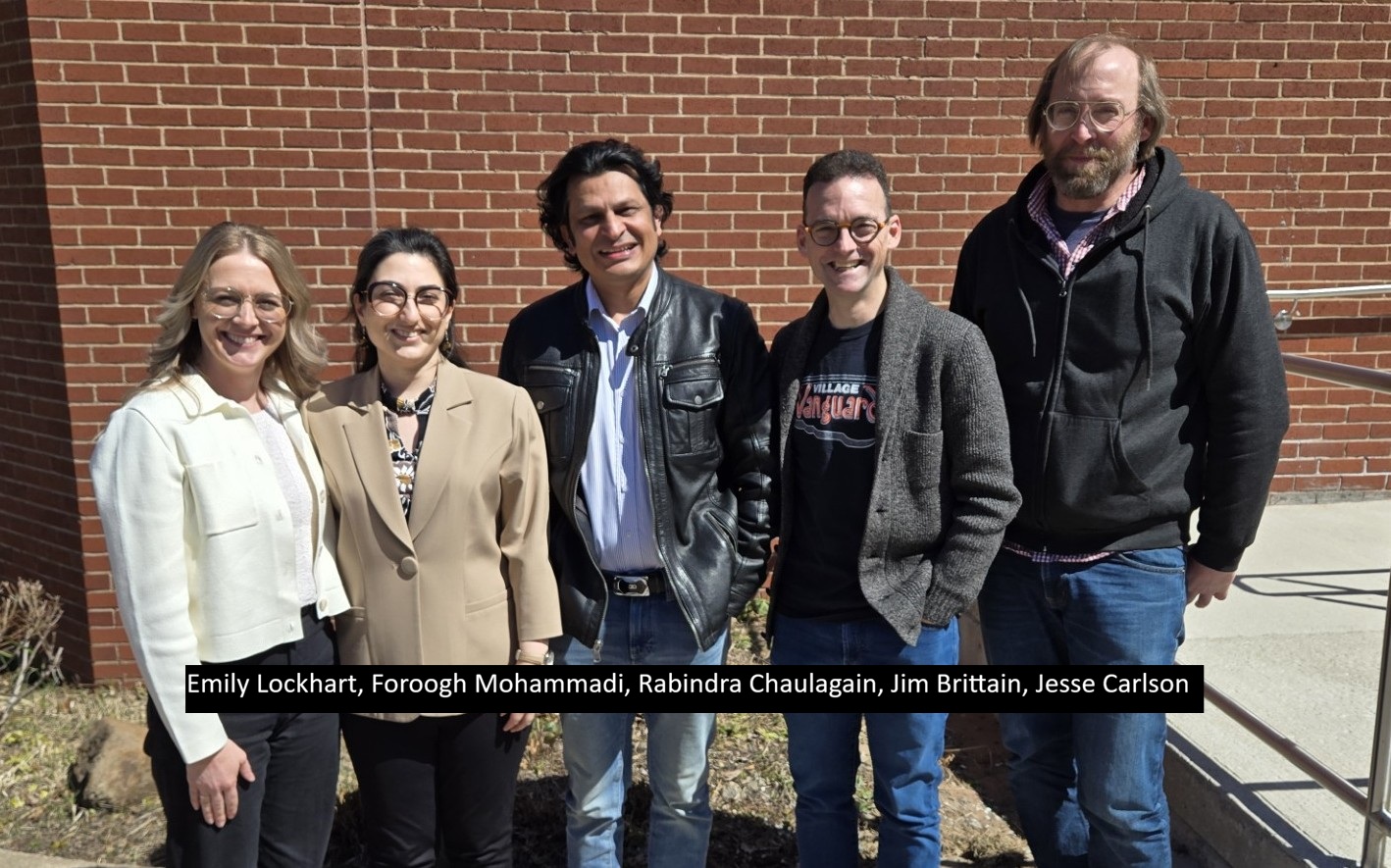
In a climate where university faculty increasingly find themselves overworked and under-resourced, a small cluster within the Department of Sociology at Acadia University could not help but recognize the need for one committee to move from being 'active' on paper yet dormant in execution. In the Fall of 2024, (alphabetical order) Jim Brittain, Rabindra Chaulagain, Emily Lockhart, and Foroogh Mohammadi came together to refashion an Anti-Colonization and Anti-Racism Committee as a means to be more.
After challenging and repeated interventions from various faculty and students speaking to less than welcoming experiences, the committee quickly began coordinating holistic ways to not simply support those within the Acadia community who had faced racialized transgressions but generate meaningful outlets to concretely respond to them. This led to a series of open sessions beginning in early 2025, which enabled any and all members on campus to do more than converse but build community. As these bi-weekly endeavours grew exponentially, faculty, staff, and students were able to collectively generate lines of communication and solidarity. The success of these engagements then compelled the ACARC to organize more formal events. In March 2025, for example, amidst the horror of Gaza, the ACARC organized a panel that welcomed El Jones (Mount St. Vincent University), Ahlam Rahal (Acadia University), Tarek Ajjour (Community member from Gaza), and Acadia for Liberated Palestine to speak to a packed auditorium on The Nakba in Palestine: An Ongoing Colonial Project (see attached). By the end of its first year, the ACARC's efforts had helped bloom more than a sense of community but catch the attention and interest of the administration.
After coordinated meetings with Acadia's Provost and Vice President Academic, Ashlee Consolo, during the Summer, the ACARC sustained its work in the Fall of 2025. So did the committee at this time welcome Jesse Carlson as a new member to the ACARC. Picking up from where the previous academic calendar year left off, sessions swiftly ensured a place for fruitful interactions for voices from across Acadia’s campus to be heard, welcomed, and safe. In addition to these community-based sessions, so did the committee begin efforts - in conjunction with the Department of Sociology Speakers Series, various Departments within the Faculty of Arts, and the office of the VPA - to organize a series of events that centred the critical research and work of Robyn Maynard (University of Toronto-Scarborough). In February 2026, Maynard was invited to Acadia and delivered a public talk on “Policing Black Lives” and a more formal research presentation related to “Abolition and Fascism” (see attached). So did Foroogh Mohammadi and Rabindra Chaulagain coordinate a targeted and intimate session where Maynard was able to speak with racialized faculty, students, and staff about strategies to harness the power and strength of solidarity in response to reactionary forces that would seek to divide.
Apart from a clear growth in the popularity surrounding the sessions and events organized by the ACARC at Acadia, there is something to be learnt from the importance and need to foster spaces for collective discussion and community.